
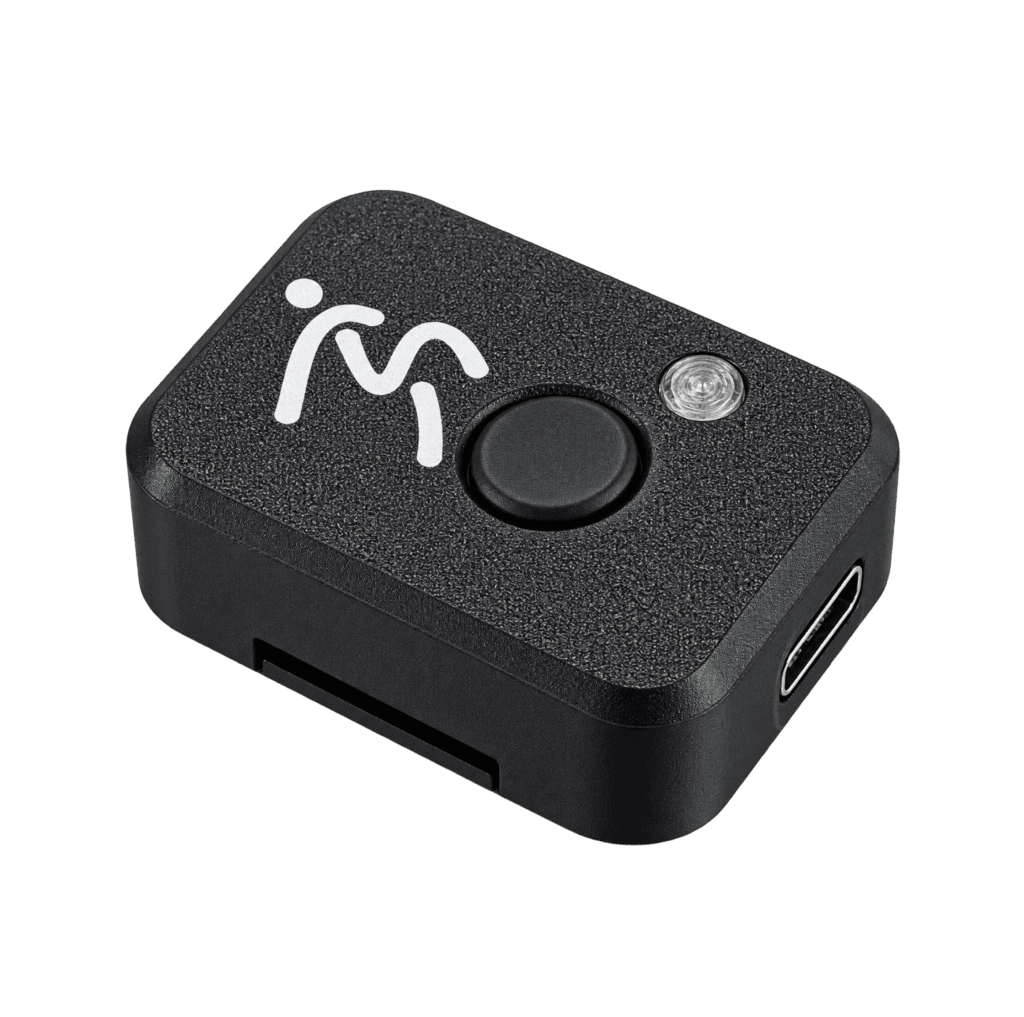
Accuracy, consistency, affordability, and ease of use are the pillars of Dashr. Dashr Motion has been in the works for years and can be used as a motion trigger for timing or a VBT sensor. Many more applications for it are in development as well.
Looking for instructions for using the Motion device for VBT? Go HERE.
The validation process for Dashr Motion’s VBT application was completed using high speed video in parallel with the live IMU data stream from the Motion device. Testing utilized a Smith machine to control the movement of the bar, removing out of plane rotations. A camera recording at 250 Hz was setup in plane with the movement of the bar to track the bar in 2D space.
With this we pulled out the position of the every 0.004 seconds throughout the lift to create a position curve. A simple derivative of this curve gives us velocity which we were able to compare to the velocity reported from the Motion device.
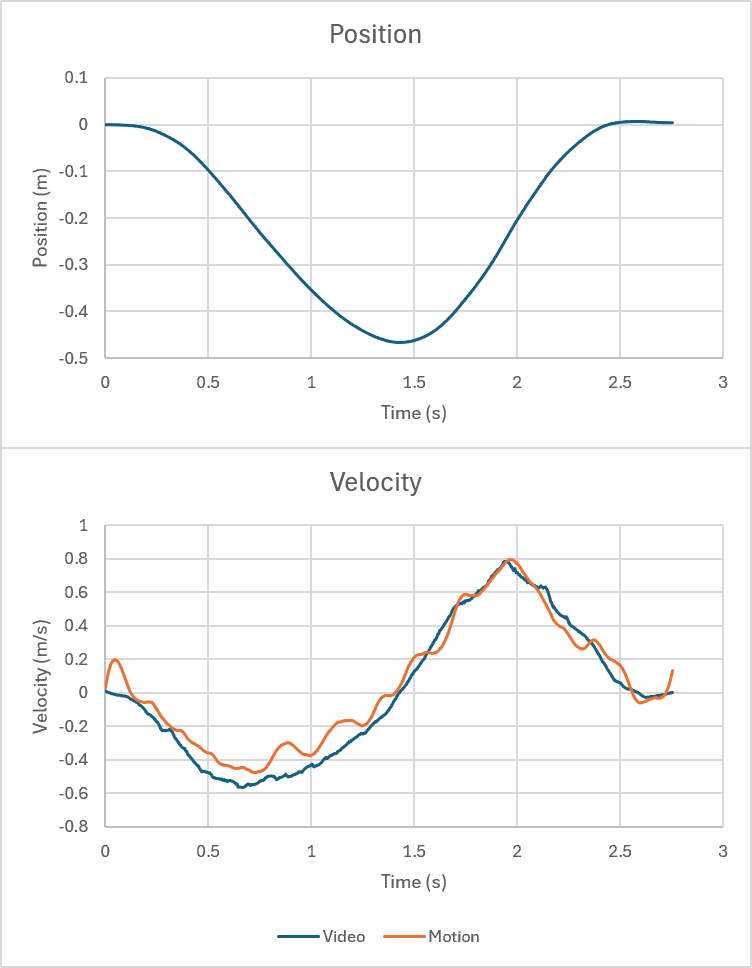
In this example here, high speed video reported an average velocity of 0.406 m/s and the motion device reported 0.405 m/s. For the peak, high speed video reported 0.782 m/s and the motion device reported 0.795 m/s.
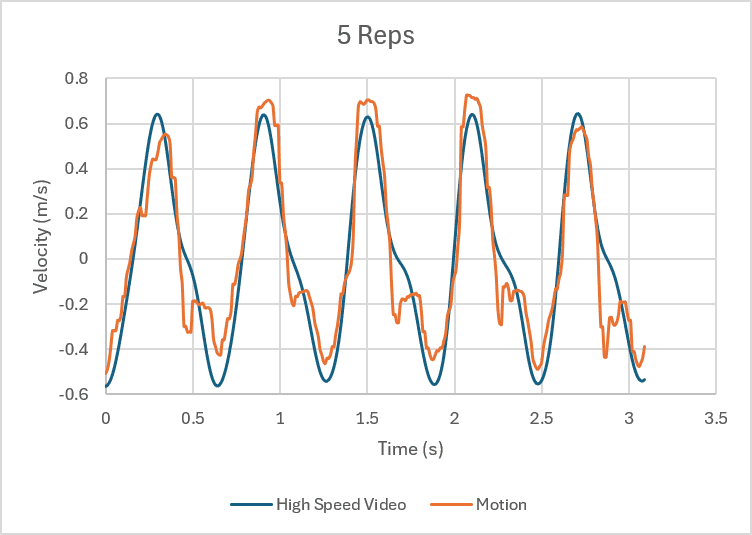
Following this model for 100s of reps with multiple lift types, we found the average velocity to differ by an average of 0.010 +/- 0.006 m/s or 1.03% +/- 0.61%. For peak velocity we found an average difference of 0.017 +/- 0.009 m/s or 1.47% +/- 0.82%.


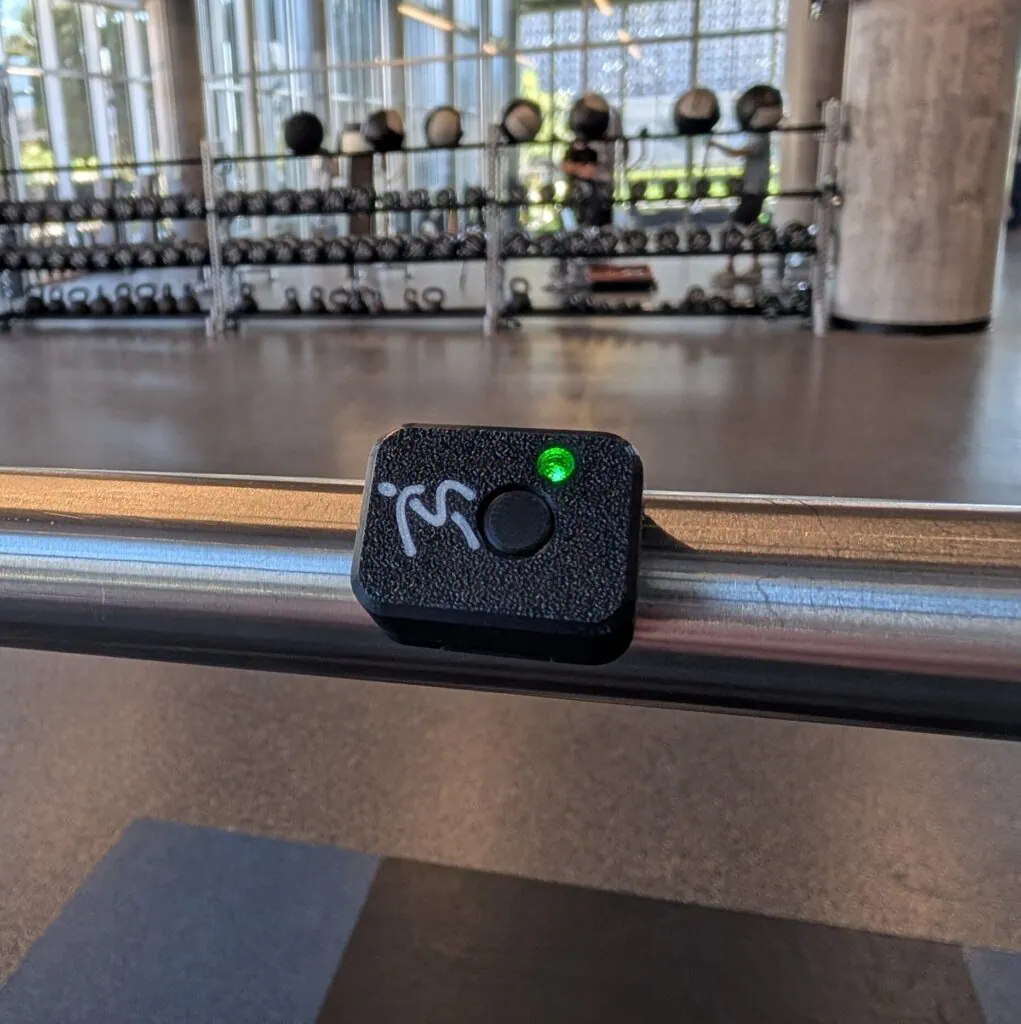


Dashr Motion
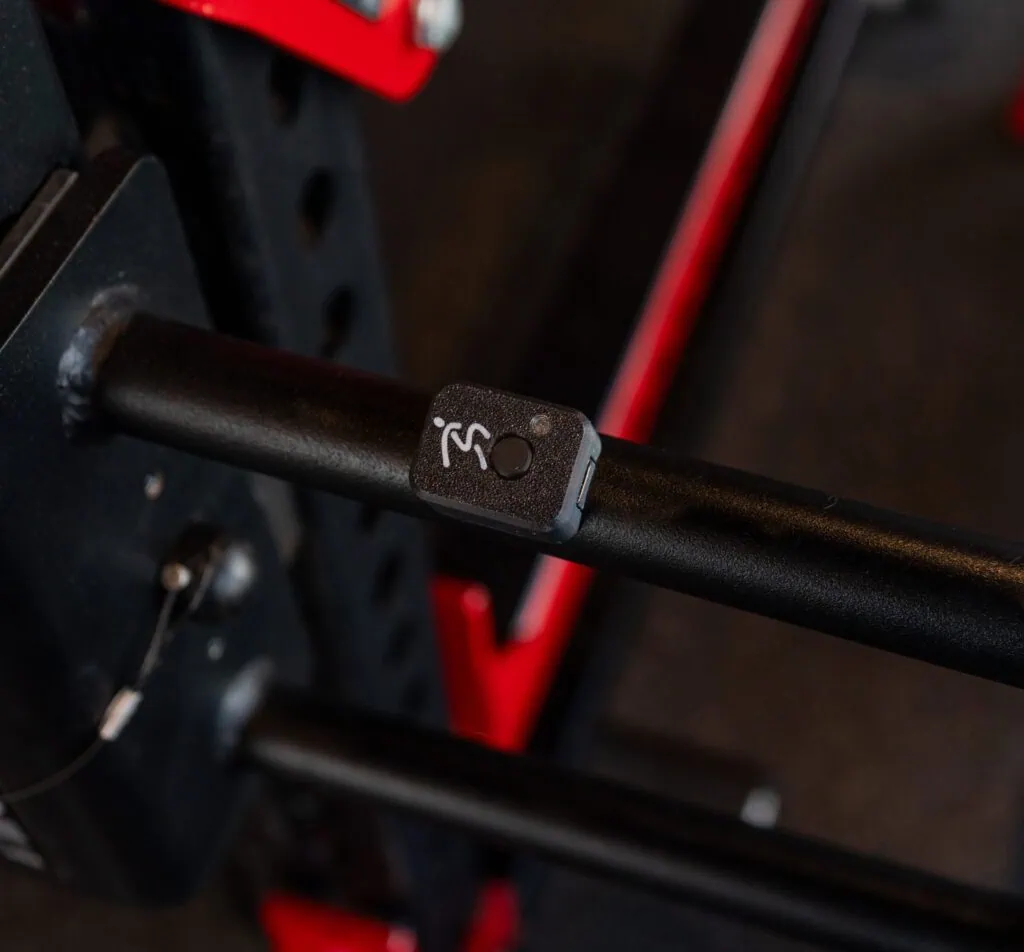
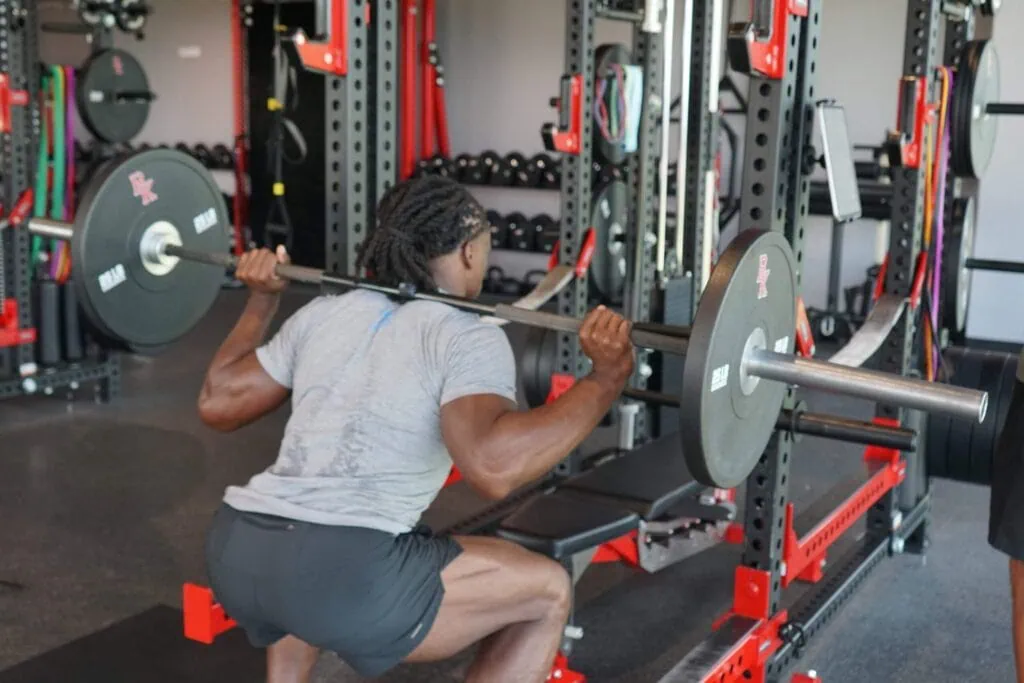
Dashr Motion brings velocity-based training into the Dashr ecosystem with a compact, wireless sensor designed to measure barbell movement in real time.
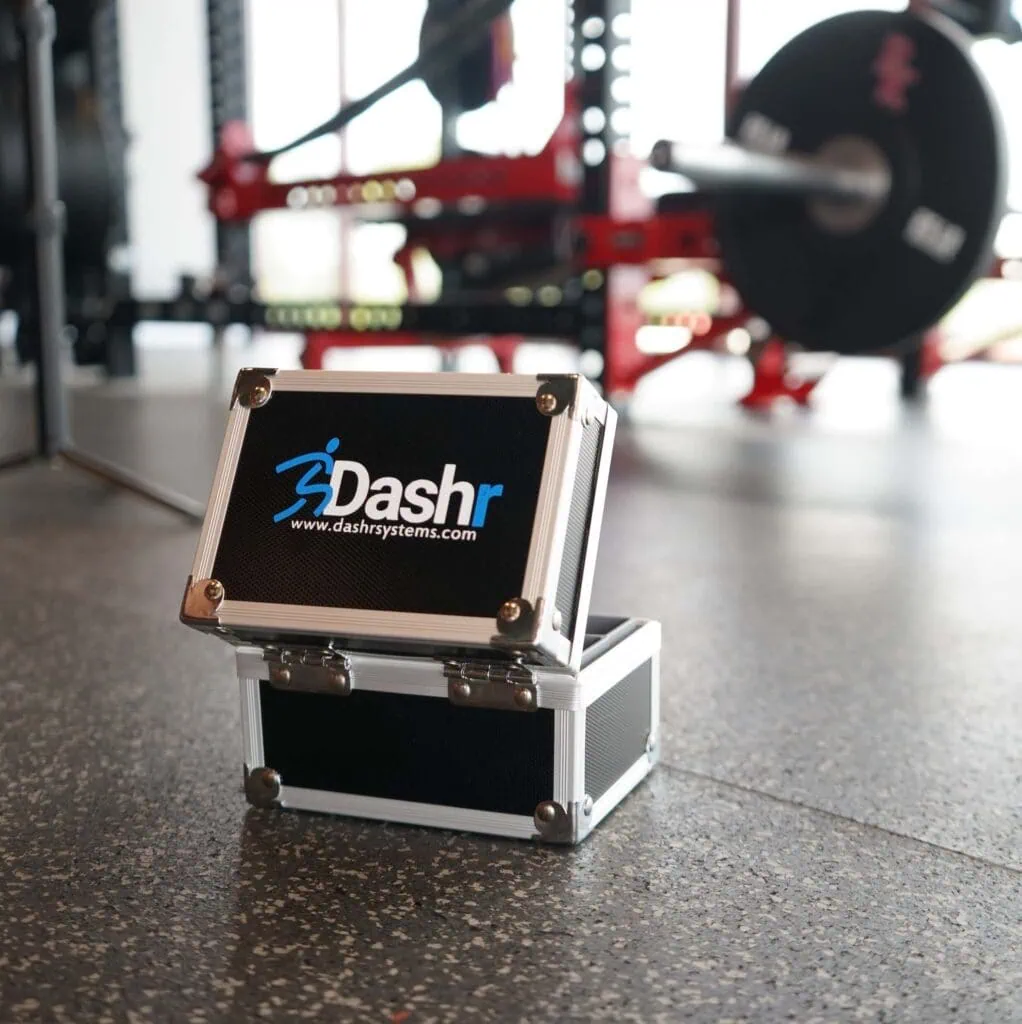
What comes in the case?
- Dashr Motion sensor (magnetic)
- Attachment strap
- Charging cable
- USB charger
- Magnetic phone holder