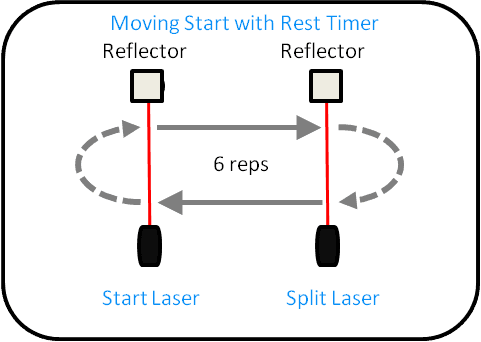
The Running Based Anaerobic Sprint Test (RAST) was devised at the University of Wolverhampton in the UK, and the standard version involves six sprints over 35 meters with a 10 second recovery between each sprint, and provides measurements of peak power, average power and minimum power along with a fatigue index (Draper & Whyte, 1997).
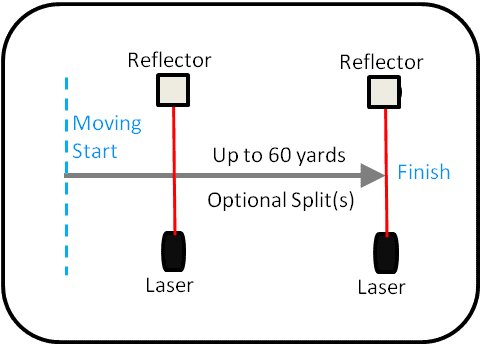
The Flying drill is a time/speed measure from point A to point B with optional splits in-between. Note that a Fly uses a moving start and requires 2 timing gates.
The T-Test is a simple running test of agility, involving forward, lateral, and backward movements, appropriate to a wide range of sports - but is especially common in basketball.
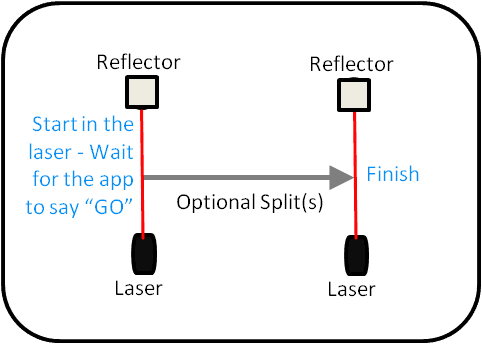
The Dash is a time/speed measure from point A to point B with optional splits in-between. Note that Dash uses a stationary start and requires 2 timing gates.
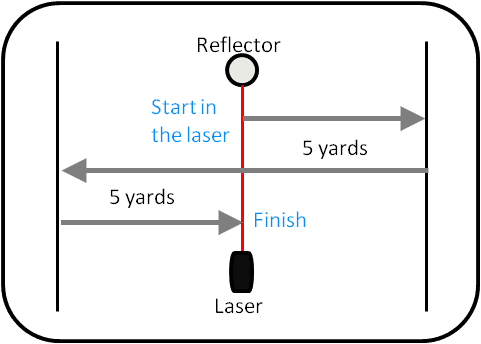
Dashr elevates the Pro-Agility drill, a comprehensive test of speed, explosion, body control, and directional agility. The technology seamlessly integrates with this drill, utilizing a stationary start and requiring only one timing gate for accurate measurements. An additional gate can be added for a 3-point start.
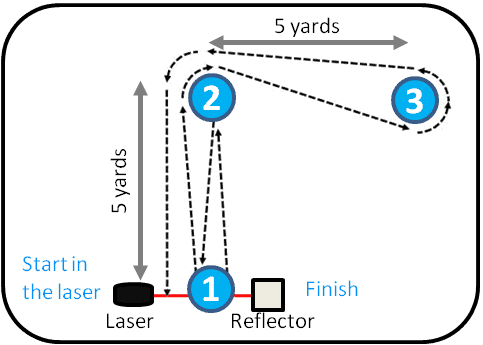
The L-Drill evaluates football players' speed, quickness, flexibility, and ability to change direction swiftly. Using a stationary start and one timing gate (or an additional gate for timing off hand movement), Dashr accurately measures athletes' body control and agility, providing valuable insights for performance enhancement.
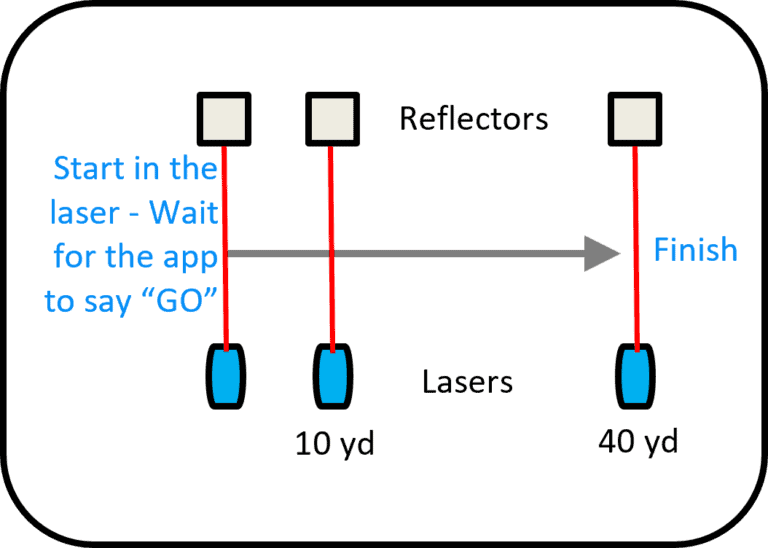
Measuring linear speed in football, the 40-yard Dash has evolved to evaluate not just top speed but also acceleration, a critical attribute on the field.